


Network meta-analysis and multiplicity of results
Network Meta-Analysis (NMA) combines data from different studies on multiple treatments in order to estimate their relative effects.
The amount of evidence to analyse and interpret can be demanding, especially when numerous treatments are involved.
Software available so far did not provide satisfactory solutions to improve the visualisation and sorting of large and/or complex results.
NMA studio: a new interactive tool
It is in this context that NMA studio was developed in 2020, to produce and visualise network meta-analyses in a fully interactive way. As a web application, NMA studio improves visualisation while simplifying the reporting and interpretation of results.
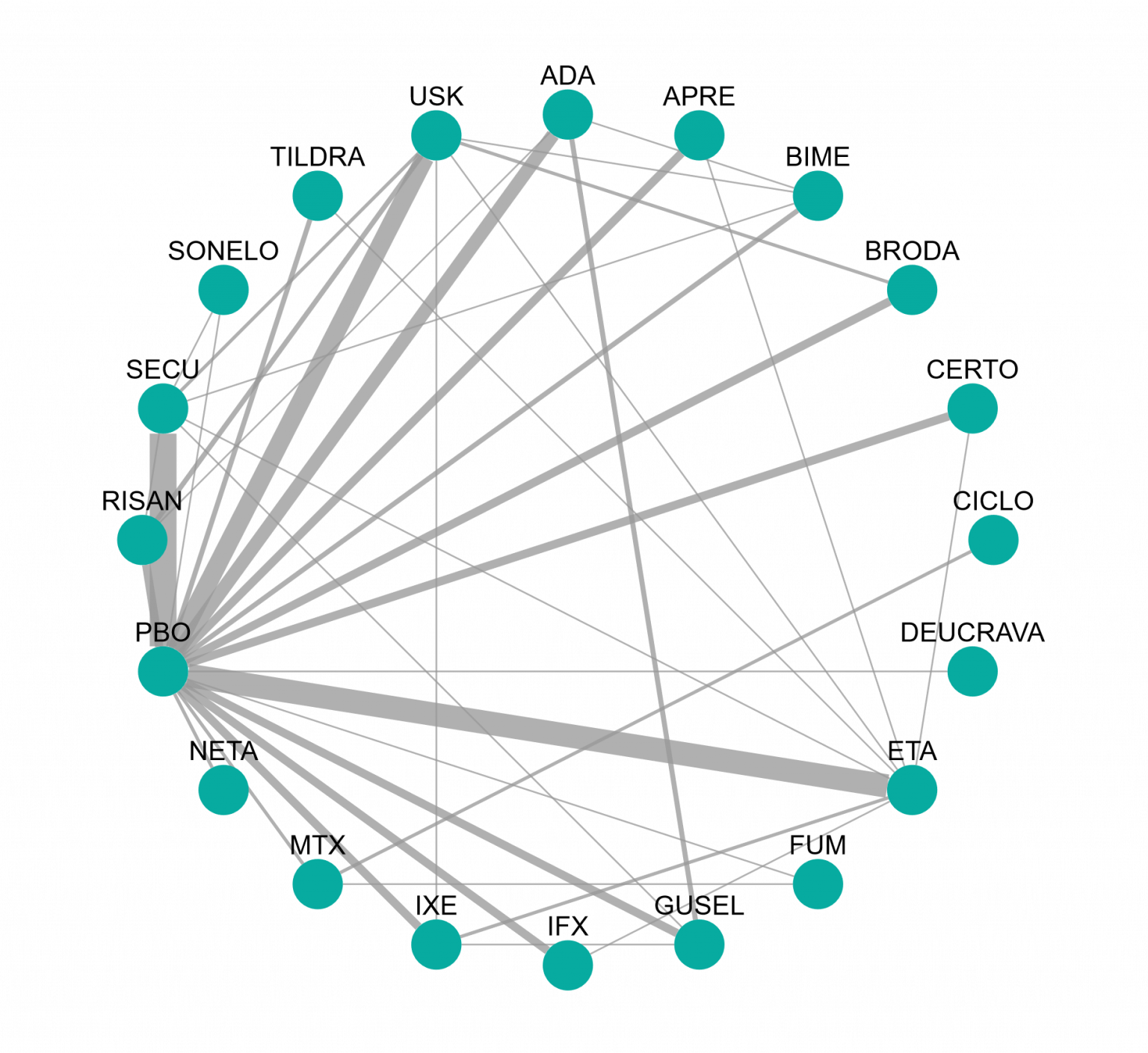
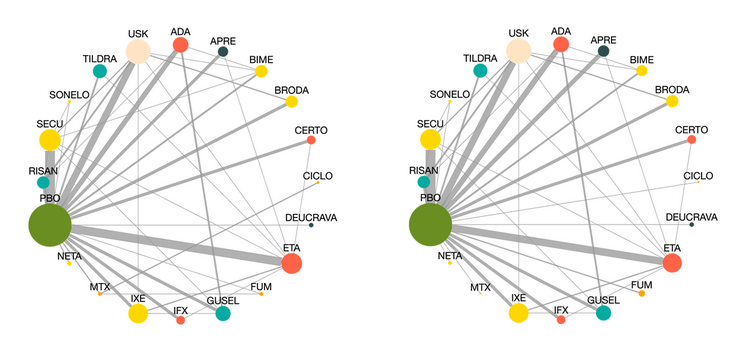
The main feature of the tool is a direct visual connection between a customisable network diagram and the main results of the network meta-analysis.
Users can upload their data and interact with the network diagram by clicking on:
- One or several nodes (treatments).
- Or edges (comparisons).
Depending on the selection, customised results and information are displayed.
NMA studio: a free open-source application
NMA studio uses the Python programming language while being connected to the R netmeta package (Network Meta-Analysis using Frequentist Methods) to generate analyses.
The results are then imported into Python where interactive and downloadable visualisations are created using “Plotly” modules.
No prior knowledge of these tools is required to use NMA studio. The application is open source and can be accessed free of charge via any web browser at: www.nmastudioapp.com
CINeMA (Confidence in Network Meta-Analysis)
NMA studio allows users to upload the CINeMA (Confidence in Network Meta-Analysis)report file in its original format to provide additional visualisations. CINeMA is a web application that simplifies the assessment of confidence in the results of a network meta-analysis.

Two researchers behind the NMA studio project

Université de Paris, Research Center of Epidemiology
and Statistics (CRESS-U1153), Inserm,
Paris, France

Université de Paris, Research Center of Epidemiology
and Statistics (CRESS-U1153), Inserm, Paris, France
Cochrane France, Paris, France
Page created using NMA studio web-application: A brief tutorial by Silvia Metelli and Anna Chaimani.