

Epilogy for “Epidemiology and evaluation of therapeutics in dermatology and immune-mediated inflammatory diseases”.
The Epilogy team aims to provide evidence-based and up-to-date information on therapeutic assessment and therapeutic strategy for patients with chronic dermatoses and/or immune-mediated inflammatory disorders (IMIDs).
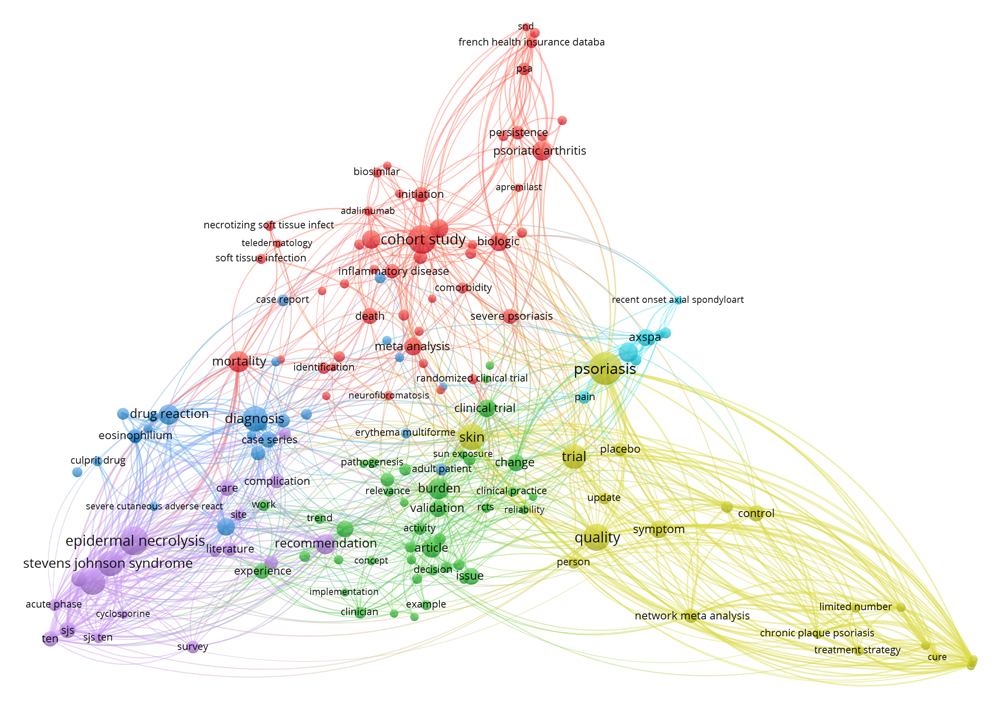
Our research focuses on patients with IMIDs, including psoriasis, atopic dermatitis and hidradenitis suppurativa, as well as chronic inflammatory rheumatism (such as spondyloarthritis and rheumatoid arthritis), inflammatory bowel diseases, sarcoidosis, and autoimmune disorders (such as lupus and systemic sclerosis). Our work also focuses on rare skin diseases, including toxic bullous diseases and other severe cutaneous adverse reactions (SCARs), autoimmune bullous diseases and neurofibromatosis, in relation to our two specialist referral centers for rare diseases (TOXIBUL and CERENEF).
Our research program is structured along three main complementary axes:
- Efficacy of drugs and therapeutic strategies for patients with IMIDs or rare skin diseases.
- Increasing detection of drugs-related adverse events of interest and risk factors.
- Identifying pitfalls in design and reporting of primary research and evidence synthesis in therapeutic assessment.
When?
Epilogy, formerly known as EpiDermE, was founded in 2018.
Who?
To do so, Epilogy is built around a core of drug-specialist physicians, clinicians (rheumatologists, dermatologists, internal medicine specialists), pharmacists, epidemiologists, methodologists and biostatisticians.
How?
The originality of our scientific approach lies in the re-analysis and synthesis of existing data from randomized controlled trials (RCTs) or observational studies to assess treatment effect on these specific populations (evidence synthesis); to address the limitations of RCTs, we also provide long-term efficacy and safety data from wider population thanks to available healthcare data such as cohorts, routinely collected/warehouses of in- and out-of-hospital clinical data or medico-administrative data) (new real-world evidence); and lastly, we combine these different sources in an integrative approach taking into account the case-mix heterogeneity.
Thus, we perform systematic reviews and network meta-analyses to obtain a global view of the benefit-to-risk balance for all the available drugs in a given disease. We also conduct pharmacoepidemiology studies in order to emulate existing trials but with larger inclusion criteria (including participants usually excluded from pivotal RCTs), or to support approval in new indications (drug repurposing).
We aim to develop novel approaches for causally interpretable meta-analyses and observational studies, ensuring reliable interpretation of the effect of the intervention on the outcomes while taking into account heterogeneity of the data. Lastly, data quality constitutes a corner stone of data analysis... Thus, we developed a research-on-research axis to discuss the reliability of the results obtained.
Why?
Our ambition is to provide useful data for policy stakeholders, guideline groups and patients’ associations about benefit-risk balance of various therapeutic strategies. Most of our research projects is labelled or funded by international and French health institutions, such as the EMA-DARWIN-EU initiative, Cochrane Skin group, CNAMTs, ANSM, ANR, Inserm and the Ministry of Health, which demonstrates our ability to translate our research into practice and policy.